
Fact-checked by the digital reach solutions editorial team
Quick Answer
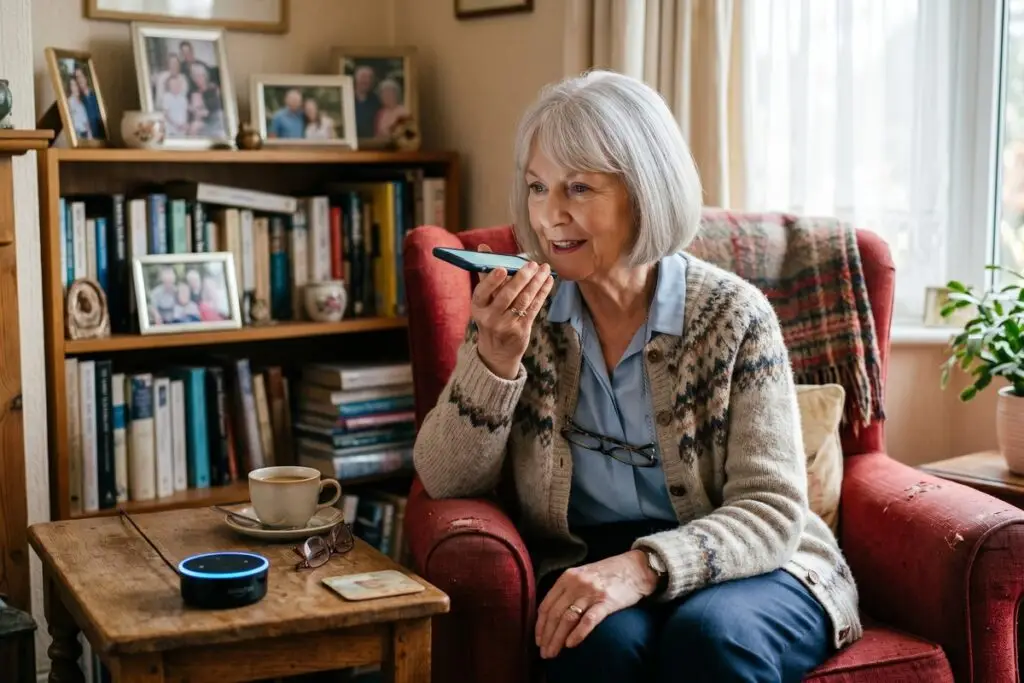
As of July 2025, seniors are using phone voice assistant hacks — including custom wake phrases, medication reminders, and hands-free calling routines — to manage daily life independently. Over 53% of adults 65+ now own a smartphone, and voice assistant adoption in this group has grown by 40% since 2021, making these hacks a practical path to longer at-home living.
Phone voice assistant hacks for seniors are reshaping how older adults manage medications, stay connected, and navigate daily routines without caregiver support. According to Pew Research Center’s 2024 Mobile Fact Sheet, 53% of U.S. adults aged 65 and older now own smartphones — and a growing number are unlocking built-in voice tools far beyond simple weather queries.
The stakes are real. Isolation, missed medications, and falls are leading causes of early assisted-living placement. Voice assistants, configured correctly, directly address all three. This is not about novelty tech — it is about practical independence.
Which Voice Assistants Work Best for Seniors?
Apple Siri, Google Assistant, and Amazon Alexa are the three dominant platforms for phone voice assistant hacks seniors are using today, and each has distinct strengths depending on the device and use case.
Google Assistant leads in natural language understanding, handling complex, multi-step requests with fewer corrections. Siri integrates tightly with iPhone Health and Emergency SOS features — critical for older adults on Apple devices. Amazon Alexa, accessible via the Alexa app on Android and iOS, offers the broadest smart-home device compatibility.
Key Platform Differences at a Glance
For seniors using Android, Google Assistant’s Continued Conversation feature allows multi-step commands without repeating the wake phrase. On iPhone, the hidden iPhone accessibility features that power users rely on — including Voice Control and AssistiveTouch — layer on top of Siri for hands-free navigation even when Siri cannot complete a task alone.
Seniors with low vision benefit most from Google Assistant’s screen reader integration with TalkBack on Android, while iPhone users gain more from VoiceOver paired with Siri. Both are free and pre-installed.
Key Takeaway: Three platforms — Siri, Google Assistant, and Alexa — cover nearly all senior use cases. Choosing the right one depends on device type: Apple’s accessibility suite pairs best with Siri for emergency features, while Google Assistant leads for natural conversation on Android.
What Are the Most Useful Phone Voice Assistant Hacks Seniors Use Daily?
The highest-impact phone voice assistant hacks seniors use daily fall into four categories: medication management, emergency communication, fall detection response, and cognitive reminders.
Medication and Health Reminders
Asking Google Assistant or Siri to “remind me to take my blood pressure medication every day at 8 a.m.” creates a recurring verbal alert that reads the reminder aloud — not just a silent notification. Seniors with hearing aids can pair Bluetooth-connected devices so the reminder plays directly into the hearing aid. According to the CDC’s medication safety data, 125,000 deaths annually in the U.S. are linked to medication non-adherence, making this one of the most clinically significant voice assistant applications.
Emergency and Safety Calls
On iPhone, saying “Hey Siri, call 911” or “Hey Siri, I need help” initiates an emergency call without unlocking the screen. Android users can configure Google Assistant emergency shortcuts to call a preset contact by voice — useful when hands are occupied or mobility is limited. These features require no additional apps and no subscription fees.
Cognitive and Daily Routine Support
For seniors with early-stage memory concerns, voice assistants serve as external cognitive scaffolding. Routines like “Good morning” sequences can read the day’s appointments, weather, and medication list in one command — a technique therapists at the Alzheimer’s Association recommend as a compensatory daily strategy. If you are also exploring your phone’s built-in screen time tools, pairing them with voice reminders creates a structured daily framework that reduces cognitive load.
Key Takeaway: Voice-triggered medication reminders address a crisis: the CDC estimates 125,000 U.S. deaths per year are linked to missed medications. Configuring a daily recurring voice reminder on any smartphone costs nothing and takes under two minutes to set up.
| Voice Assistant | Best For | Key Senior Feature | Platform |
|---|---|---|---|
| Google Assistant | Android smartphones | Continued Conversation, TalkBack integration | Android (free) |
| Apple Siri | iPhone users | Emergency SOS, Health app, VoiceOver | iOS (free) |
| Amazon Alexa | Smart home control | Alexa Calling, Care Hub monitoring | iOS + Android (free app) |
| Samsung Bixby | Samsung Galaxy users | Quick Command routines, Vision mode | Samsung devices (free) |
How Do Seniors Set Up Voice Assistants for Maximum Independence?
The most effective setup for senior independence combines personalized wake-word training, simplified contact lists, and pre-built routines — all of which take under 30 minutes to configure.
Start with voice recognition training. Both Google Assistant and Siri allow users to train the assistant to recognize their specific voice pattern. This reduces misfire activations and improves accuracy for users with softer or higher-pitched voices — common in older adults. Go to Settings > Google > Voice Match on Android or Settings > Siri > Listen for “Hey Siri” on iPhone to complete this step.
Simplified Contact Configuration
Label contacts by relationship, not just name: “Mom,” “My Doctor,” or “My Pharmacy” instead of formal names. Voice assistants respond to relationship labels, so saying “Call my doctor” works without remembering a full name. This single hack reduces call failures significantly for seniors with mild cognitive decline.
Routine and Shortcut Building
Google Assistant’s Routines feature (found in the Google Home app) lets caregivers or seniors build multi-step automations triggered by a single phrase. A “Good Night” routine can turn off smart lights, lock the smart door, and set a morning medication reminder — all from one voice command. Apple’s Shortcuts app provides equivalent functionality on iPhone. For users who want to reduce how much time they spend interacting with their phone manually, combining voice routines with Android Quick Settings panel tricks creates a dramatically more accessible daily experience.
“Voice-based technology removes the primary barrier older adults face with smartphones — the small touchscreen. When the interface becomes conversation, adoption rates and daily utility both increase dramatically. We see measurable improvements in medication adherence and social connection within weeks of setup.”
Key Takeaway: Voice recognition training and relationship-labeled contacts are the two highest-impact setup steps for seniors. According to MIT AgeLab research, removing touchscreen dependency through voice interfaces measurably improves both medication adherence and social engagement within weeks.
What Security Risks Come With Phone Voice Assistant Hacks Seniors Should Know?
The primary security risks for seniors using voice assistants are voice spoofing, unintended purchases, and privacy data exposure — all of which have specific, configurable defenses built into each platform.
Voice spoofing — where a recorded voice triggers a command — is a documented vulnerability. Google and Apple have both implemented liveness detection updates since 2023, but seniors should still disable purchase authorization by voice. On iPhone, go to Settings > Siri > Allow Siri When Locked and toggle off purchases. On Android, disable “Purchase with voice” inside Google Assistant Settings > Payments.
Privacy and Data Concerns
Voice queries are processed on remote servers by Google, Apple, and Amazon. Each company retains voice data for varying periods unless users opt out. Apple offers the strongest on-device processing option via Siri Privacy Settings. Seniors concerned about data retention should review the FTC’s privacy guidance on smart devices for a plain-language breakdown of their rights.
Phishing through voice assistants is an emerging threat. Criminals use spoofed “assistant” responses via compromised smart speakers to request personal information. Seniors should know that no legitimate voice assistant will ask for a Social Security number or bank password by voice. For broader digital safety context, understanding how phishing attacks have changed and how to spot them is a critical complement to voice assistant use.
Key Takeaway: Disabling voice-authorized purchases and reviewing data retention settings takes under 5 minutes but eliminates the two most common senior-targeted voice assistant fraud vectors. The FTC’s smart device privacy resources provide step-by-step opt-out instructions for all major platforms.
How Are Caregivers Using These Hacks Remotely to Support Seniors at Home?
Caregivers are using Amazon Alexa’s Care Hub, Google Assistant sharing features, and iPhone’s Family Sharing to monitor and support seniors remotely — without requiring physical presence.
Amazon Alexa Care Hub (free, available through the Alexa app) lets a designated caregiver receive an activity summary and alerts when an elderly family member has not interacted with their device by a set time. This passive monitoring approach respects autonomy while providing a safety net. According to AARP’s voice technology research, 70% of older adults prefer passive monitoring tools over wearable alert devices because they feel less stigmatizing.
Remote Reminder Injection
Caregivers with access to a senior’s Google account can add reminders remotely through Google Calendar — these sync and play aloud on the senior’s Android device without any action required from the senior. Apple’s Family Sharing feature similarly allows location sharing and app-based reminders across accounts.
For families navigating these phone voice assistant hacks for seniors across different device types, the challenge is often matching the senior’s existing device to the right ecosystem. Trying to retrofit an iPhone-based caregiver setup onto an Android senior’s phone creates friction. Matching ecosystems — Android-to-Android or iPhone-to-iPhone — delivers the most seamless experience. If speed or performance is also a concern on the senior’s device, reviewing common mistakes people make when trying to speed up a slow Android phone can ensure voice commands respond without frustrating delays.
Key Takeaway: 70% of older adults prefer passive monitoring over wearable devices, per AARP’s voice technology research. Amazon Alexa Care Hub and Google Calendar remote reminders deliver that passive safety net at zero cost, using tools already installed on most smartphones.
Frequently Asked Questions
What are the easiest phone voice assistant hacks seniors can set up without help?
The easiest hacks require no apps or accounts: just say “Hey Siri” or “Hey Google” to set medication reminders, call contacts by relationship name, or ask for the weather. Training voice recognition in Settings improves accuracy and takes under three minutes.
Can voice assistants call 911 for a senior who has fallen?
Yes. On iPhone, “Hey Siri, call 911” works from a locked screen with no physical interaction required. Android’s Google Assistant can be configured to call emergency contacts or 911 via the Emergency SOS setting under Safety settings — no third-party app needed.
Are phone voice assistants safe for seniors with dementia or memory loss?
Voice assistants are widely recommended by occupational therapists for early-to-mid-stage dementia as cognitive scaffolding tools. The Alzheimer’s Association supports their use for daily routine reinforcement. Caregivers should disable purchasing features and configure simplified contact lists to reduce confusion and fraud risk.
Which phone voice assistant is best for seniors with hearing loss?
Apple Siri paired with Made for iPhone (MFi) hearing aids delivers the most seamless experience — the assistant’s responses stream directly into compatible hearing aids via Bluetooth. Google Assistant supports similar functionality with select Android-compatible hearing devices certified through the Android Audio Routing standard.
How do I set up a “Good Morning” routine on a senior’s phone?
On Android, open the Google Home app, go to Routines, and create a routine triggered by the phrase “Good morning.” Add actions: read today’s calendar, check weather, and list medication reminders. On iPhone, use the Shortcuts app to build an equivalent automation triggered by voice through Siri.
Can caregivers monitor whether a senior has used their voice assistant today?
Amazon Alexa Care Hub provides daily activity summaries and inactivity alerts to a designated caregiver at no cost. Google does not offer a direct equivalent, but Google Home activity logs and shared calendar interactions can serve as indirect usage indicators for families managing seniors remotely.
Sources
- Pew Research Center — Mobile Fact Sheet 2024
- Centers for Disease Control and Prevention — Medication Safety
- AARP — Voice Technology and Older Adults Research
- MIT AgeLab — Massachusetts Institute of Technology
- Federal Trade Commission — Privacy and Security for Connected Devices
- Apple — iPhone Accessibility Features Overview
- Alzheimer’s Society — Assistive Technology for Dementia